
The Clubs With the Most Titles in European Cup History
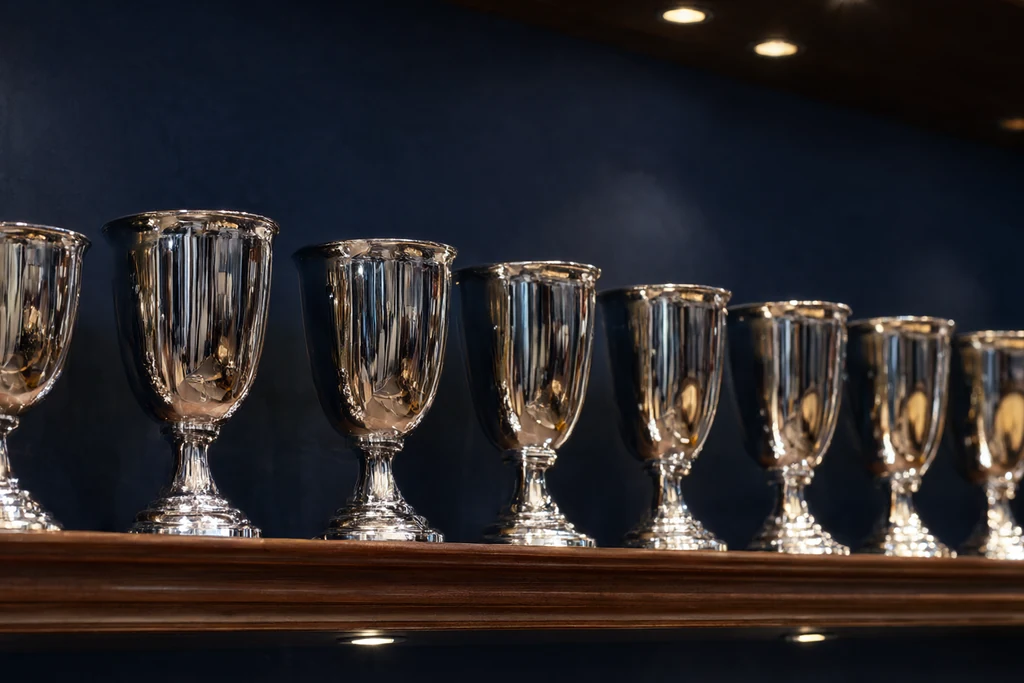
Individual records measure players, but the titles table measures institutions. It counts the European Cup and the Champions League together, and it ranks the clubs by the trophies they have lifted, so it is the record of the competition's greatest winners.
The record holder
The table is led by the club with the most titles, a total gathered across the whole history of the competition. No other club comes near the mark, and it includes the first five editions, when the same side won the trophy in each of the opening seasons.
Its position is unmatched. The record holder has won more titles than any other club, its total reaching into double figures, and the distance between it and the next name is the largest in the table.
The chasers
Behind the leader sit the other great clubs of Europe. The second name on the list holds seven titles, gathered across four decades, and behind it a group of four clubs holds four, five or six, each of them a power of its own era.
The spread is narrow at the top and long below it. Several clubs hold six, five or four titles, and the count falls away gradually, so the table is dominated by a small group of names and then carries a long line of clubs with one or two.
The dynasties
Some totals were built in a single burst. The record holder won the first five editions in a row, and other clubs have taken three consecutive titles, so a dynasty can lift a club quickly up the table when the right side holds together.
Other totals were gathered slowly. Several clubs built their count across different eras, winning a title here and another there, and their totals are the sum of several separate strong sides rather than one long run.
Why the same clubs recur
The favourite few recur because the same conditions produce them. A club that reaches the final often and wins it sometimes accumulates titles, and the clubs with the largest resources and the strongest squads are the ones most likely to appear at the top of the table.
The record also reflects history. The competition has run since 1955, and the clubs that were strong in its early decades still carry the titles they won then, so the table is a record of the whole era rather than of the present alone.
Reading the titles table
The titles table should be read as the roll of the competition's winners. It names the clubs that have lifted the trophy and how often, and its shape shows how concentrated the honours have been in a small group of names.
For a reader, the table is the shortest summary of the competition's history. A handful of clubs holds a large share of the titles, and the rest of the field is spread across the decades, one or two trophies at a time.
- The table counts European Cup and Champions League titles together.
- The record holder has won more titles than any other club.
- The second name on the list holds seven titles.
- Several clubs hold six, five or four titles.
- Some totals came in a single run and others across eras.
- The honours are concentrated in a small group of clubs.
| Position | What it holds |
|---|---|
| Record holder | A double-figure total, unmatched |
| Chasers | Clubs with seven, six or five titles |
| Long tail | Clubs with one or two titles |
The titles table is the roll of the competition's winners. It gathers the trophies of both eras, it is led by a club whose total no other has approached, and it shows how a small group of names has taken a large share of the honours across seven decades.