
The Champions League Trophy and the Story of Its Design
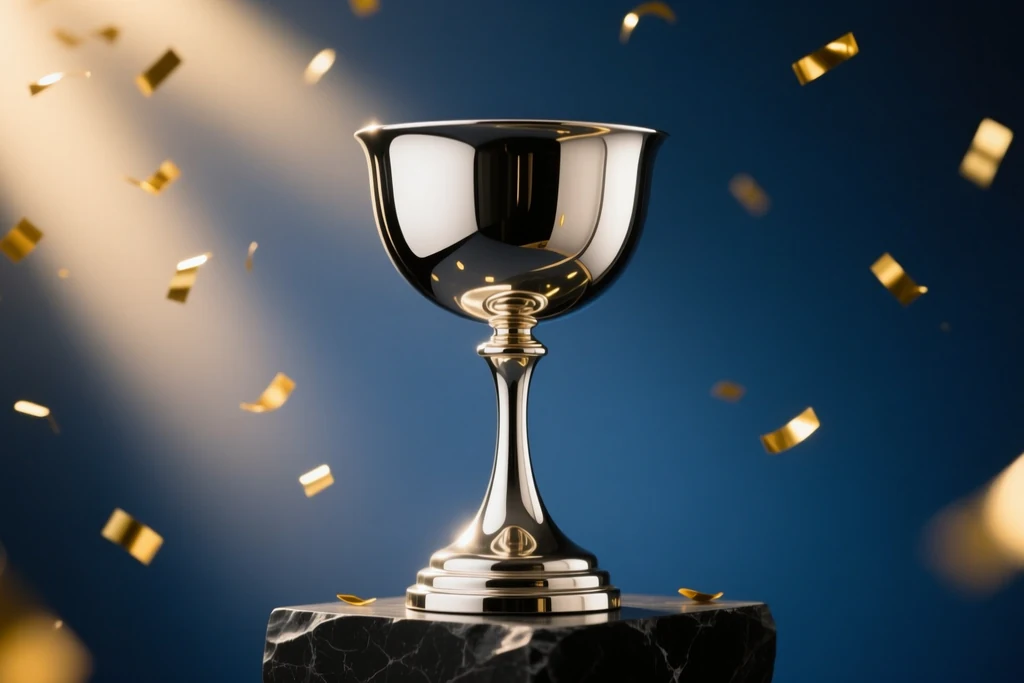
A competition is known by its trophy, and this one is known by a large silver cup. The object itself is older than the Champions League name, having been awarded since the European Cup began in 1955, and its design has become the image that a supporter pictures when the tournament is mentioned.
What the trophy is
The trophy is a silver cup with a distinctive shape. It is large and handled, made of silver, and it is presented to the winning club after the final, so the object is the physical reward of the competition and the centre of its most photographed moment.
It is kept by the winning club for a season. The trophy travels to the winners and is displayed by them until it is claimed again, and its journeys from one champion to the next are part of the way the competition is remembered.
Why the design is distinctive
The shape of the trophy sets it apart from other prizes. It is a design that can be recognised at a distance, and its silhouette has become the shorthand for the competition, which is why it appears across the visual identity of the tournament.
The design is also practical. A large handled cup can be lifted by a captain, carried around a pitch and displayed to a crowd, and the object is made to be held aloft at the end of a final as much as to sit in a cabinet.
The silver and the making
The trophy is made of silver, a metal chosen for its lustre and its association with great prizes. The material gives the cup its look under floodlights, and the sight of it gleaming on a plinth is part of the image of the final.
Because it is made to be handled, the trophy is robust as well as handsome. It is lifted, carried and shown season after season, and it has to withstand a long life at the centre of the competition's ceremonies.
The trophy as a symbol
More than any other object, the trophy stands for the competition. Its image is used to announce the tournament, and a photograph of a captain lifting it is the picture that sums up a season, so the object is a symbol before it is a prize.
The symbol is stable because the trophy is stable. The competition has changed its name and its format, but the cup remains the same, and it links the European Cup of 1955 with the Champions League of today.
Reading the trophy
The trophy should be read as the meeting point of the competition's history and its present. It is old enough to have been lifted by the winners of the first European Cup and new enough to be lifted at every modern final, and it carries both eras in one object.
For a reader, the trophy is the competition made physical. Its design, its silver and its name have outlasted every change of format, and it is the single thing that every champion of Europe, in every era, has held in their hands.
- The trophy is a silver cup awarded to the winner of the final.
- It has been awarded since the European Cup began in 1955.
- The winning club keeps it for a season.
- Its design is recognisable at a distance.
- It is made to be lifted and displayed by a captain.
- It links the first European Cup with the modern game.
| Feature | What it means |
|---|---|
| A silver cup | The physical prize of the competition |
| Held for a season | Carried by the winners until claimed again |
| A fixed design | A symbol that outlasts every format change |
The trophy is the competition made physical. A silver cup awarded since 1955, it is the object at the heart of every final, the image that announces the tournament, and the one thing that every champion of Europe has held in their hands.